
Is the Sonoran Desert Institute worth it? For students exploring technical careers, this question sits at the intersection of tradition and technology. The Sonoran Desert Institute (SDI), accredited by the Distance Education Accrediting Commission (DEAC), recognizes that well-designed distance learning can deliver practical, skills-based training, at scale. Online trade education has expanded from introductory correspondence courses to immersive digital classrooms, that prepare students for hands-on work in real industries. Over the past two decades, structured distance learning has reshaped vocational training by combining mailed tools with online instruction. This approach creates accessible pathways to skilled professions, without requiring relocation.
When online trade schools first appeared, many doubted that practical skills could be taught through screens. Lab work, tool handling and safety practices seemed too tactile to digitize. Early adopters responded with a hybrid model that mailed physical kits directly to students, allowing them to practice core techniques at home. Students then received structured feedback through online platforms.
From Correspondence Courses to Career Pathways
Distance learning once meant waiting for materials to arrive in the mail, completing exercises in isolation, and hoping that the returned feedback matched professional standards. Modern online trade programs replaced this with coordinated timelines, digital submission portals, and real-time instructor interactions. Weekly checklists and discussion boards keep learners accountable, while structured projects replicate industry expectations.
Read More: How to Choose the Right NGO for Girl Child Education in India
This shift reflects broader trends in the education sector. As industries require specialized skills in fields,such as drone technology, firearms repair, machining and inspection, students weigh tuition against potentialoutcomes. The question is no longer just about the cost. It’s about whether the training leads to employable skills, professional credentials and measurable growth. As students compare online trade programs, many search for phrases like “Sonoran Desert Institute worth it” to identify options that combine affordability, flexibility and trusted instruction.
The Role of Hands-On Kits
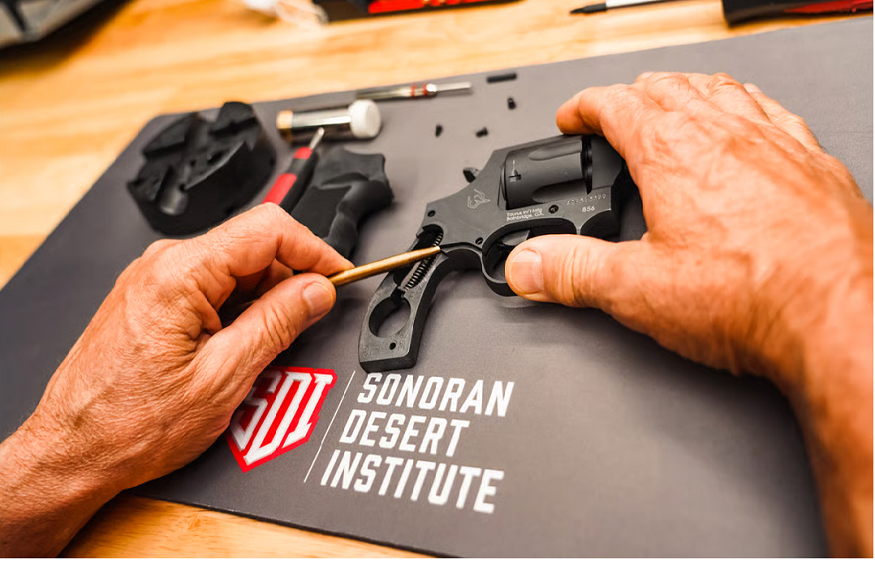
One defining feature of online trade education is the mailed lab kit. These kits arrive organized in step-by-step sequences, matching the lesson order of each course. Students unpack tools, fixtures and materials, then follow digital modules that guide each procedure. They record their work through photos or narrated videos, which instructors review using detailed rubrics. This feedback loop mirrors quality control procedures used in professional service centers, giving students the chance to correct tool angles, measurement techniques or documentation habits, before entering the workforce.
For example, a firearms technology student may receive a practice receiver, punches, gauges and blueprint diagrams. Each assignment builds on the latest, reinforcing safety standards and technical accuracy. By the end of the course, learners have created a tangible portfolio of work that demonstrates their skill progression. This combination of mailed components and online guidance is one reason students often describe the Sonoran Desert Institute as worth it for their goals, when comparing trade schools.
Read More: 10 Innovative Programs Transforming Girl Child Education in Rural India
Digital Labs Bring the Classroom Home
Beyond physical kits, modern programs integrate advanced simulation tools and interactive media. Students access digital labs that replicate flight controllers, machining environments and inspection workflows, allowing them to practice and refine their skills. Using screen-sharing technology and open-source software, they practice procedures before handling real equipment. This method reduces risk, while providing instructors with precise playback options during evaluations.
For drone technology learners, this might involve using a mailed simulator controller connected to flight software. Instructors can watch students navigate scenarios and provide time-stamped notes on their technique. For gunsmithing students, digital labs may display slow-motion animations of mechanical cycles, helping them visualize complex functions before applying fundamental tools. These digital environments reinforce foundational knowledge, bridging the gap between theory and application.
Expanding Access Without Lowering Standards
Online trade education has also broadened access for groups who might otherwise face barriers to traditional schooling. Working adults can complete coursework after shifts, veterans can use GI Bill benefits without relocating, and career changers can test new fields without pausing their lives. Schools design asynchronous modules that respect varied schedules, while maintaining strict grading rubrics to ensure skill standards remain high.
Cost also plays a significant role. Tuition transparency, credit transfer maps and federal financial aid options give students clear pathways from certificates to associate degrees. As learners plan their education strategically, many find Sonoran Desert Institute worth it because its structure allows them to stack credentials, without repeating courses or incurring additional fees. Each certificate or degree builds on the previous one, reflecting the realities of modern career development.
Ethics and Industry Readiness
Technical training encompasses not only mechanical skills. Modern programs emphasize compliance, documentation and safety as essential components of professional preparation. Courses include federal regulations, local laws, risk management practices and ethical considerations for drone operators, covering airspace rules and pre-flight procedures. For firearms technicians, this involves safe handling, adherence to regulatory requirements, and accurate record-keeping. Students learn not only how to use tools, but also how to operate responsibly within regulated industries.
This focus on both skill and accountability has become a defining standard for high-quality trade education. When students evaluate options, many look to institutions with proven track records in balancing practical application and regulatory knowledge.In this context, many compare schools by searching for phrases like “Sonoran Desert Institute worth it,” which helps them evaluate which programs build readiness for both the workshop and the broader professional field.
Student Experiences Shape Perceptions
Behind every program are individual stories of students balancing work, study and ambition. One graduate described receiving their first lab kit in a small apartment kitchen and transforming that space into a workable bench. Another shared how digital flight simulations gave them confidence before their first outdoor operation. These stories reveal the adaptability of online trade education and the meaningful outcomes it produces.
A Future Built on Access and Quality
The evolution of online trade education demonstrates that distance learning can impart more than just theory. By combining mailed kits, digital labs and structured feedback, modern programs create structured pathways for students to build and demonstrate practical skills. Flexible formats, transparent costs and industry-aligned curricula give students accessible options to pursue meaningful careers. In this landscape, it stands out as a structured, accredited pathway for learners seeking hands-on technical education.